
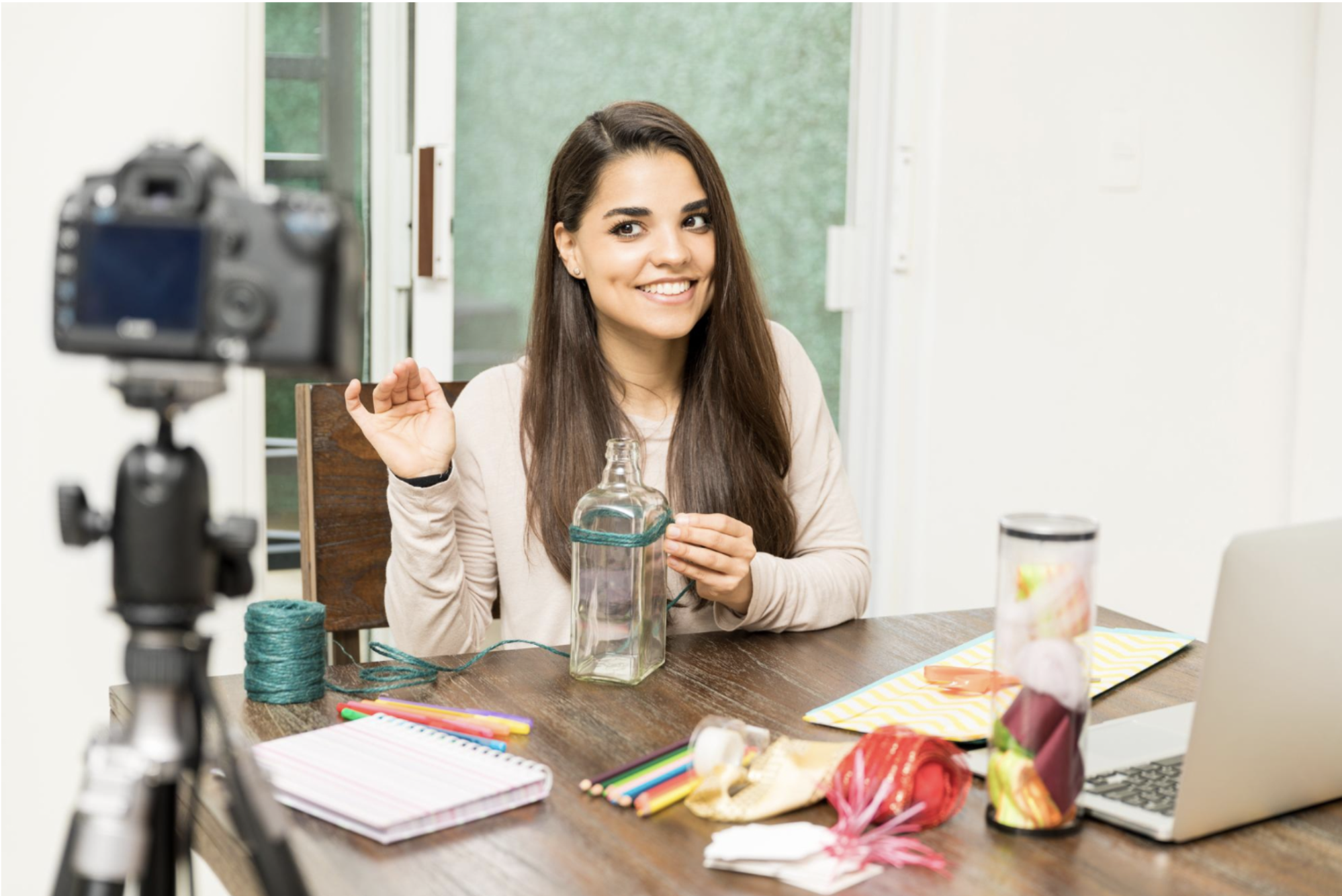


An independent producer with a finished film and a modest marketing budget faces a brutal arithmetic problem. A single sponsored post from a mega-celebrity can cost as much as an entire indie marketing campaign, and it will be seen by tens of millions of people who have no particular reason to care about a small movie. The counterintuitive truth that has reshaped digital marketing over the past several years is that those tens of millions are often worth less — dollar for dollar and even in absolute engagement — than a few thousand devoted followers of a niche creator. For independent film, where success depends on converting a specific audience rather than blanketing a general one, the case for micro-influencers is close to overwhelming.
The Engagement Paradox
The foundational data point is simple and remarkably consistent across studies: engagement rate falls as follower count rises. According to Captiv8’s 2024 Organic Benchmark Report, nano-influencers on Instagram — accounts under roughly 10,000 followers — average around a 6.23 percent engagement rate, while mega-influencers with 1.5 million or more followers average about 2.80 percent. Micro-influencers in the 10,000-to-50,000 range land near 3.86 percent, per figures aggregated from Sociallyin’s 2025 statistics. The widely cited summary is that micro-influencers deliver roughly three times the engagement of mega-influencers on Instagram.
TikTok, the platform most relevant to film discovery, shows the same gradient even more sharply. Aggregated benchmark data reported by eMarketer puts nano-influencer engagement around 10.3 percent, micro-influencers around 8.7 percent, and mid-tier creators around 7.5 percent — with engagement continuing to decline as accounts scale up. On a cross-platform basis, one analysis found nano-influencers averaging 2.53 percent engagement against just 0.92 percent for mega-influencers. Stack Influence’s data, cited in the same body of research, frames it another way: micro-influencers receive roughly 60 percent more engagement relative to their audience size than larger accounts.
The mechanism behind these numbers is not mysterious. Smaller creators maintain something closer to a genuine relationship with their audience. Their comment sections are conversations, not stadiums. Their recommendations read as advice from a knowledgeable friend rather than a paid placement — which aligns with Nielsen’s long-standing finding that around 92 percent of consumers trust recommendations from individuals over brand advertising. When a creator with 8,000 followers who posts exclusively about A24 horror films recommends a small independent horror movie, the recommendation carries a credibility that no celebrity endorsement can manufacture.

Why This Matters More for Indie Film Than for Anyone Else
For a consumer-goods brand, a mega-influencer’s low engagement rate can still be justified by sheer reach — a fraction of a percent of 30 million people is a lot of people. Independent film breaks that logic in two ways.
First, indie films are niche products by definition. A microbudget horror film, a queer coming-of-age drama, a cerebral science-fiction feature — each has a specific, identifiable audience, and the goal is not to reach everyone but to reach the right thousands and convert them into ticket buyers, streamers, and word-of-mouth evangelists. A niche creator’s audience is pre-sorted; the film is being shown to exactly the people predisposed to want it. That precision is worth more than reach.

Second, the indie film economy runs on conversion and advocacy, not impressions. A studio tentpole can absorb a scattershot awareness campaign because it will be everywhere anyway. An indie film needs a smaller number of viewers to actually show up and, critically, to tell others. Engagement — comments, saves, shares, duets — is the leading indicator of that advocacy. High-engagement niche audiences don’t just watch; they participate, and participation is what turns a small film into a conversation.
The platform behavior of the target demographic reinforces the strategy. Industry data indicates a large majority of Gen Z — around 74 percent in some surveys — now turn to TikTok over Google for movie discovery. For a generation that finds its films through creator content rather than trailers or reviews, the creators who shape taste in specific genres are the single most valuable marketing channel available.
The A24 Blueprint — Adapted for Smaller Budgets
The independent distributor A24 offers the clearest proof of concept, even though it now operates at a scale beyond most indie producers. A24 built a cultural brand not by buying mass reach but by cultivating micro-communities on the platforms where cinephiles actually gather — Letterboxd, Reddit, and TikTok — with marketing designed, in the company’s own philosophy, to feel “like discovery” rather than selling. Its campaigns turned viewers into advocates through participatory objects and moments: the hot-dog-finger gloves for Everything Everywhere All at Once, the Tinder bot deployed at SXSW for Ex Machina, the replica props for Midsommar and Uncut Gems. Even A24’s more expensive recent efforts, like the reported $60 million Marty Supreme, lean on “leaked” videos and inside-joke content engineered to be shared by fans rather than broadcast by the studio.
The transferable lesson for a producer without A24’s resources is method, not budget. A24’s genius is treating the audience as a community to be activated rather than a market to be bought. Micro-influencers are the practical mechanism for doing exactly that on limited funds: they are the nodes through which a niche community talks to itself.

A Practical Strategy for the Budget-Constrained Producer
For an independent producer, the following approach translates the data into action.
Identify the film’s actual community, then find its creators. Before spending a dollar, define precisely who the film is for — genre fans, a regional audience, a fandom, a subculture — and find the creators who already command that audience’s trust. On TikTok, nano-influencers make up roughly 87.7 percent of all creators and about 75.9 percent on Instagram, so the supply of relevant small accounts is deep. The goal is fit, not fame.
Buy breadth, not a single big name. The cost of one celebrity post can fund partnerships with dozens of micro-creators. A portfolio of ten to thirty niche creators produces more total engagement, more authentic-seeming endorsements, and more diversified risk than a single high-follower placement. If one post underperforms, it barely dents the campaign; a single failed mega-post can consume the whole budget.
Optimize for engagement and saves, not impressions. Because engagement is the leading indicator of advocacy and conversion for indie film, producers should structure deals and judge results on engagement rate, comments, and shares rather than raw view counts. A creator with 15,000 followers and a genuinely responsive audience is a better buy than one with 500,000 passive followers, even at a similar price.
Give creators material to make, not scripts to read. The value of a micro-influencer is authenticity, which dies the moment the content reads as a paid ad. Producers should hand creators clippable assets — a striking scene, a memorable line, a behind-the-scenes moment, an on-set experience — and let them fold the film into their own voice and format. The A24 model of “marketing that feels like discovery” depends on the audience never quite feeling marketed to.
Seed a sound or a moment. The most efficient TikTok film campaigns give the platform something to remix — a line of dialogue, a musical cue, a visual gag — that can detach from the film and propagate on its own. A single sound adopted by thousands of creators multiplies reach at no marginal cost, and it does so through exactly the high-trust, high-engagement small accounts that drive conversion.
The Honest Caveats
The micro-influencer strategy is not friction-free. Managing dozens of small partnerships requires more coordination than negotiating one big deal, and vetting for genuine audience fit and authentic engagement — as opposed to purchased followers — demands real diligence. Engagement statistics also vary meaningfully by source, platform, and methodology; the specific percentages cited above should be read as consistent directional evidence rather than laboratory constants. And no distribution of creators can rescue a film the audience ultimately doesn’t want.
But the strategic conclusion is robust across every serious data set: for a product defined by its niche and dependent on advocacy, reach is the wrong metric and celebrity is the wrong instrument. The independent producer’s advantage is not a bigger megaphone but a sharper one — a network of trusted, high-engagement creators speaking directly to the exact audience the film was made for. In a media environment where a generation discovers its movies through people it trusts on TikTok rather than ads it ignores, that sharper megaphone is not merely the affordable option. It is the better one.