


For most of Hollywood history, the arrangement between a famous face and a consumer brand was simple: the brand paid, the star smiled, and the endorsement expired when the contract did. The actor lent credibility; the company kept the equity. That model still exists, but a growing cohort of A-list performers has decided it is a bad deal. Rather than renting their fame to someone else’s balance sheet, they are building brands of their own, taking ownership stakes, and, in the most successful cases, selling those brands for sums that dwarf their acting incomes.
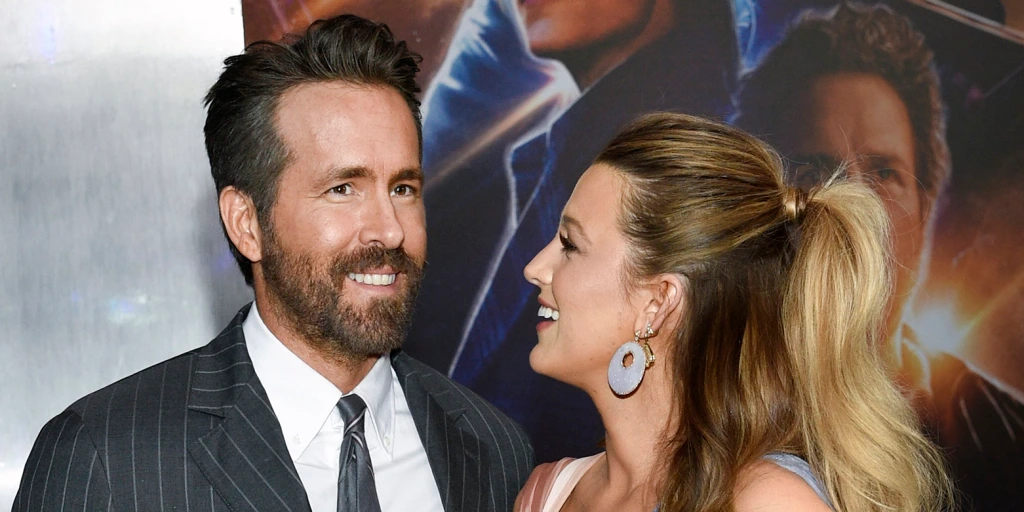
The married couple Ryan Reynolds and Blake Lively have become the emblematic case study, but they are part of a broader movement that spans George Clooney’s tequila, Dwayne Johnson’s spirits, Rihanna’s cosmetics, and Hailey Bieber’s skincare. Together, these ventures illustrate a fundamental shift in the economics of celebrity: from endorsement to ownership, from fee to equity, from ambassador to founder.
Ryan Reynolds: The Actor as Operator
No performer has demonstrated the ownership model more effectively than Ryan Reynolds. His approach has been consistent: take a meaningful stake in a scrappy consumer brand, apply his own irreverent marketing genius through his agency Maximum Effort, and sell into a strategic acquirer once the brand has scale.
His first landmark exit was Aviation American Gin. Reynolds acquired an undisclosed stake in the small-batch spirit in 2018 and became its public face and creative director. In 2020, the beverage giant Diageo agreed to acquire Aviation in a deal valued at up to $610 million, structured with an upfront payment and additional performance-based consideration. Reynolds retained an ownership interest and continued to appear in the brand’s advertising.
The far larger windfall came from an unlikely category: mobile phone service. Reynolds invested in Mint Mobile, a discount wireless carrier, in 2019, and turned its advertising into a showcase for his “fastvertising” style, rapid, cheap, culturally responsive spots produced through Maximum Effort. On March 15, 2023, T-Mobile announced it would acquire Mint Mobile’s parent, Ka’ena Corporation, in a deal valued at up to $1.35 billion, structured as roughly 39 percent cash and 61 percent stock. Reynolds remained in a creative capacity, continuing to appear in Mint Mobile advertising after the sale.
The Reynolds playbook is instructive precisely because it inverts the traditional endorsement. He was never paid a flat fee to smile beside these products; he owned them, marketed them, and captured the upside when they sold. Maximum Effort, his agency, became the connective tissue, a marketing operation that could make a gin brand or a phone carrier feel like an extension of his own comedic persona, and that has since expanded into a broader advertising and media business.
Blake Lively: Building a Beverage and Beauty Portfolio
Blake Lively has pursued the same ownership philosophy across two categories, beverages and beauty, with a deliberately founder-first posture. She launched Betty Buzz, a line of non-alcoholic sparkling mixers, in September 2021. Notably, Lively does not drink alcohol, which she used as a comedic contrast to her husband’s gin business, positioning Betty Buzz as the sophisticated, booze-free complement to a cocktail.
She extended the platform in 2023 with Betty Booze, a line of low-ABV canned cocktails that launched on June 29, 2023. The initial range carried a 4.5 percent alcohol content across flavors including sparkling tequila with lime shiso and sparkling bourbon with apple ginger sour cherry, retailing at $14.99 for a four-pack. Lively framed the line personally, joking that the recipes were ones she had long made for loved ones before, as a mother of four, deciding to put them in a can.
Her most ambitious move came in beauty. In 2024, Lively launched Blake Brown, a haircare brand sold through the mass retailer Target, marking her entry into the fiercely competitive prestige-at-mass beauty segment. The Target distribution strategy was itself a statement: rather than chasing the high-end department-store shelf, Lively aimed for accessibility and scale, betting that her audience wanted salon-quality products at drugstore reach. She has spoken publicly, including in an interview with WWD, about the personal journey behind the brand and her hands-on role in its development.
What unites Lively’s ventures is the same principle animating her husband’s: she is not a paid face for someone else’s product line. She is the founder, the creative director, and the equity holder, building brands designed to outlast any single film.

George Clooney: The Billion-Dollar Blueprint
The transaction that arguably launched the modern celebrity-brand gold rush belonged to George Clooney. In 2013, Clooney co-founded the tequila brand Casamigos alongside the entertainment entrepreneur Rande Gerber and the real-estate developer Michael Meldman. The origin story became part of the marketing: Clooney and Gerber, owners of neighboring vacation homes in Cabo San Lucas, Mexico, developed a tequila recipe for their own consumption before deciding to sell it.
In 2017, Diageo agreed to acquire Casamigos in a deal valued at up to $1 billion, structured as $700 million upfront plus up to $300 million contingent on hitting sales targets. At the time of the sale, the brand had sold roughly 120,000 cases in 2016 and was projected to exceed 170,000 by the end of 2017, with bottles retailing around $50. The founders stayed on to promote and guide the brand.
The Casamigos sale reset expectations across the industry. It demonstrated that a celebrity-founded consumer brand could, in just four years, be worth a sum that rivaled or exceeded a lifetime of acting fees, and it established Diageo as the acquirer of choice for star-powered spirits, a role it would reprise with Reynolds’ Aviation.
Dwayne Johnson: Authenticity as an Asset Class
Dwayne Johnson built his spirits business on a different foundation: the near-total fusion of product and personal brand. He launched Teremana Tequila in March 2020, and it became, by industry accounts, one of the fastest-growing tequila brands in history. In its first year the brand tracked toward roughly 400,000 cases, and it has since climbed toward 650,000, with analysts estimating a valuation in the neighborhood of $3.5 billion.
Johnson pairs Teremana with ZOA Energy, an energy-drink brand, and a broader portfolio that includes Seven Bucks Productions and a co-branded Under Armour line. What makes the Johnson model distinct is the sheer scale of his owned media: with an Instagram audience of roughly 382 million, he can market his own products to a global audience directly, without paying for distribution. Observers estimate that the large majority of his reported net worth now derives from his business ventures rather than his acting, a striking inversion for one of the highest-paid film stars in the world.
Rihanna: From Endorser to Owner
The beauty industry produced perhaps the most transformative example of the ownership model. Rihanna launched Fenty Beauty on September 8, 2017, through a 50/50 partnership with the luxury conglomerate LVMH, operated via its Kendo Brands division. The structure was crucial: rather than licensing her name for a royalty, Rihanna held half the equity and drove the brand’s creative direction, most famously its industry-shifting expansion of foundation shade ranges.
The commercial results were extraordinary. Fenty Beauty reportedly generated $100 million in sales within its first 40 days and roughly $570 million in revenue in its first full run through the end of 2017. The brand’s success ultimately made Rihanna a billionaire, with the large majority of her net worth, estimated around $1.4 billion, derived from Fenty rather than from her music career.
Fenty proved that a celebrity willing to take equity and genuine creative ownership could build a business whose value eclipsed the fame that seeded it. It became the template that a generation of celebrity-founded beauty brands would follow. The model remained dynamic years later; by late 2025, reporting indicated that LVMH was exploring the sale of its 50 percent stake in the brand, a reminder that even the most successful celebrity ventures ultimately operate within the strategic calculations of their corporate partners.
Hailey Bieber: Compressing the Timeline
If Rihanna proved the model and Clooney proved its scale, Hailey Bieber proved its speed. She founded the skincare brand Rhode in the summer of 2022, alongside the filmmaker Michael D. Ratner and Lauren Ratner. Rhode built a devoted following on a tightly curated aesthetic and a small, focused product range, and it grew fast: the company reported $212 million in net sales for the year ending March 2025.
On May 28, 2025, e.l.f. Beauty announced it would acquire Rhode in a deal valued at up to $1 billion, structured as $600 million in cash, $200 million in e.l.f. stock, and an additional $200 million in performance-based payouts over three years. Bieber retained her role as chief creative officer and head of innovation. The deal was notable for its velocity: Rhode went from founding to a billion-dollar acquisition in less than three years, a compression of the timeline that would have been unthinkable in the Casamigos era.
The Broader Beauty and Beverage Boom
Bieber and Rihanna are part of a densely populated field. Selena Gomez founded Rare Beauty in 2020, and the brand reported roughly $367 million in revenue in 2023, establishing Gomez, already among the most-followed people on the planet, as a formidable beauty entrepreneur. Kylie Jenner sold a 51 percent stake in Kylie Cosmetics to the beauty conglomerate Coty in 2020 for roughly $600 million, an early and controversial data point in the celebrity-brand valuation debate.
Across spirits, the pattern repeats. Diageo’s willingness to pay up to $1 billion for Casamigos and up to $610 million for Aviation signaled that major drinks companies view celebrity-founded brands not as marketing gimmicks but as legitimate acquisition targets capable of commanding premium multiples.
Why Ownership Beats Endorsement
The through-line connecting Reynolds, Lively, Clooney, Johnson, Rihanna, and Bieber is a rejection of the old ambassador economics. A traditional endorsement pays a star a fee that ends when the campaign does, and the brand keeps all the accumulated equity. The ownership model reverses that: the star invests time, credibility, and, above all, marketing reach into a business he or she partly or wholly owns, and captures the enterprise value at exit.
The reason the model works so well for this particular class of founder is that they arrive with the single most expensive asset in consumer marketing already in hand: attention. A conventional startup must spend enormous sums to build awareness. A celebrity founder with hundreds of millions of followers can generate that awareness organically, collapsing the customer-acquisition costs that sink most young brands. When Reynolds markets Aviation through Maximum Effort, or Rihanna announces a Fenty launch, or Johnson posts about Teremana to an audience approaching 400 million, they are deploying, for free, the marketing firepower that competitors must pay dearly to rent.
That structural advantage is why the acquirers keep writing billion-dollar checks, and why the smartest performers no longer ask what a brand will pay them to appear. They ask what a brand will be worth once they own it.